

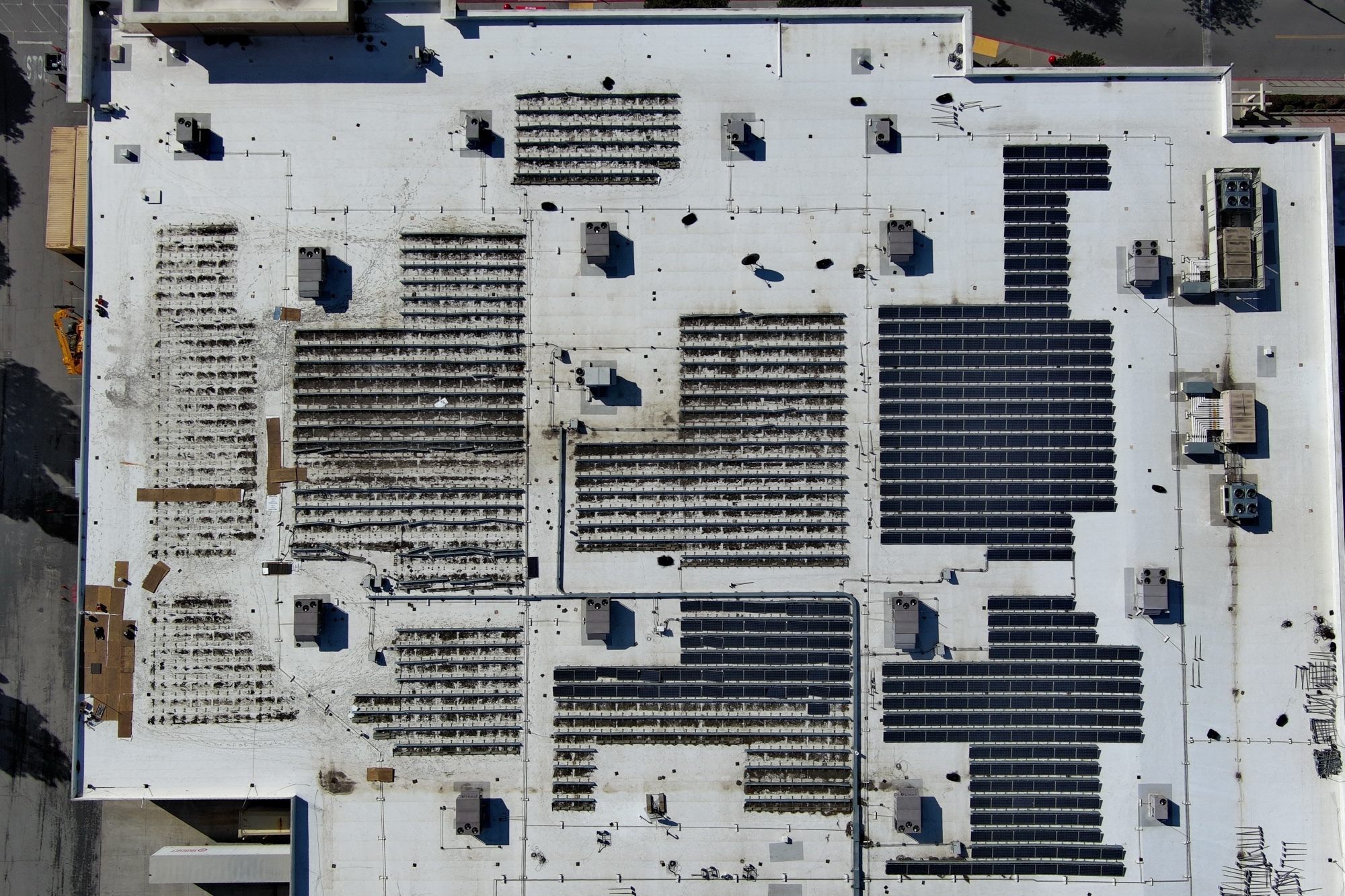
For years, the solar industry has focused on one thing: deployment. Not to bury the lead, but it’s probably obvious that we (and our competitors) realized that the next big phase of solar is going to be managing the end of life for these modules. We’re part of building an entirely new industry that is solving this problem as we speak.
What used to be a one hundred percent focus on building more projects, installing more panels, and generating more clean energy is now more nuanced and it includes a growing demand for conscious recycling of America’s solar systems.
Solar power has become one of the fastest-growing energy technologies in human history. Every year, millions of new modules are installed across utility-scale projects, commercial rooftops, and distributed energy systems around the world.
If you think we’re in need of solar decommission now… this is only the beginning. A wave is coming.
Today, many people perceive solar decommissioning as a growing industry. They aren’t wrong.
Asset owners are already facing situations that require the removal, replacement, repowering, relocation, or recycling of solar assets. Aging systems, damaged equipment, technological upgrades, roof replacements, land-use changes, and evolving economics are creating increasing demand for professional decommissioning services.
Yet compared to what lies ahead, today’s activity is only the beginning.
Most solar installations worldwide are still relatively young. At Decom Solar, we even find ourselves encouraging our clients to wait to decommission panels that have more life in them. The largest deployment boom occurred over the last decade, meaning the majority of those assets have not yet reached the stage where major decommissioning decisions need to be made.
This does mean there is a growing gap between today’s demand and tomorrow’s reality. The industry is preparing for a wave that has not yet reached shore.
Every year, additional gigawatts of solar capacity are installed around the globe.
Those assets will eventually require one of several outcomes:
As the installed base grows, the future volume of solar equipment requiring management grows alongside it. This isn’t merely a recycling challenge. It’s a logistics, compliance, and sustainability challenge. We’d argue it’s going to become a trust challenge, too.
Whenever an industry experiences rapid growth, new participants enter the market.
Solar decommissioning is no exception.
Unfortunately, not all providers are equipped to manage the complexity of large-scale solar asset retirement. As demand accelerates, asset owners will increasingly need to distinguish between companies that simply remove equipment and companies that can deliver complete, transparent, and verifiable lifecycle solutions.
The consequences of poor decommissioning practices can be significant:
As the volume of projects increases, scrutiny will increase alongside it and so will the number of deceptive recyclers and bad actors. Therefore, the industry’s future will depend on processes that are both scalable and trustworthy.
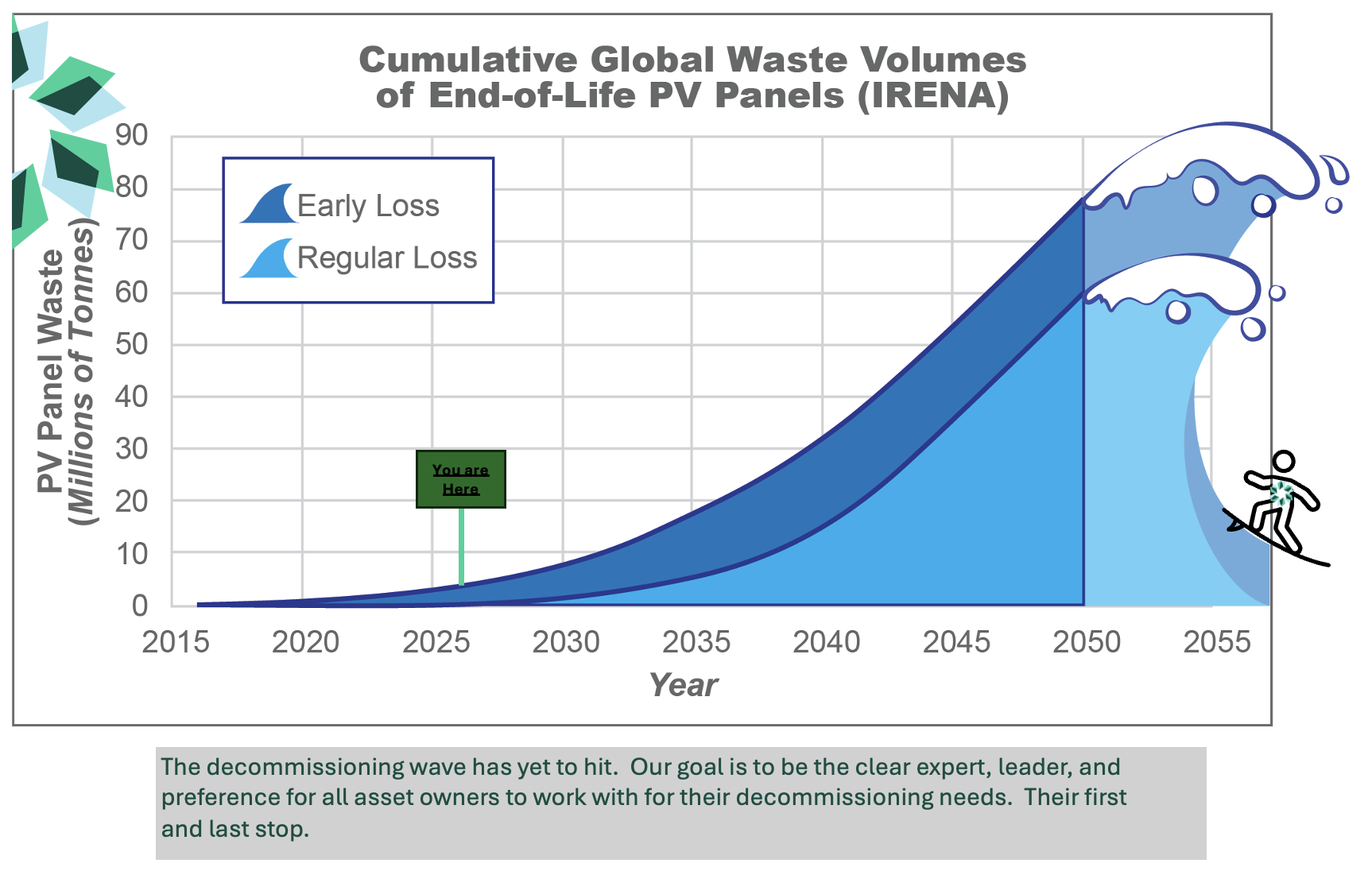
At Decom Solar, we believe the industry’s most important decommissioning work is still ahead of us. The need for quality solar decommissioning will more than double in the next ten years. By 2050, the market will demand roughly 1500% more than it does today.
While others see today’s market, we are preparing for tomorrow’s reality.
The coming wave will be larger than many realize. Asset owners who prepare now will be better positioned to navigate evolving regulations, sustainability expectations, and end-of-life asset decisions with confidence.
Frankly, when the wave arrives, decommissioning won’t be a niche service. It will be an essential part of the solar lifecycle.
And, the organizations that approach it with diligence, transparency, and expertise will define the future of responsible solar energy.

2026
| Decom Solar