

When most people hear the phrase solar decommissioning, they assume something went wrong. In fact, while no one wants to admit it, many of our partners can silently feel shame about the solar decommissioning process.
What many asset owners don’t realize is that solar decommissioning is rarely just about waste. More often, it’s a puzzle of timing, financial incentives, ownership structures, aging roofs, and so many other factors.
After all, there are many scenarios where a solar system, which is often bought with efficiency, savings, and Mother Nature in mind, needs to be replaced for logistical reasons. Ultimately, this doesn’t need to be bad news.
In reality, some of the most important solar decommissioning projects happening today are the result of logistics, changing economic incentives, and infrastructure changes like replacing a weathered roof. If asset owners utilize Decom Solar, these changes can be viewed as good news for our environment and even a wonderful story to tell.
At Decom Solar, we’ve helped organizations navigate situations where a solar system still had years of usable life left, but circumstances changed around it. The partner stories are endless:
These aren’t failures. They’re signs of a rapidly maturing industry and the asset owners that are navigating this best are working with holistic solar decommissioning groups like Decom Solar.
One project stands out as an inflection point that felt embarrassing for our partner that ultimately ended up as a win-win.
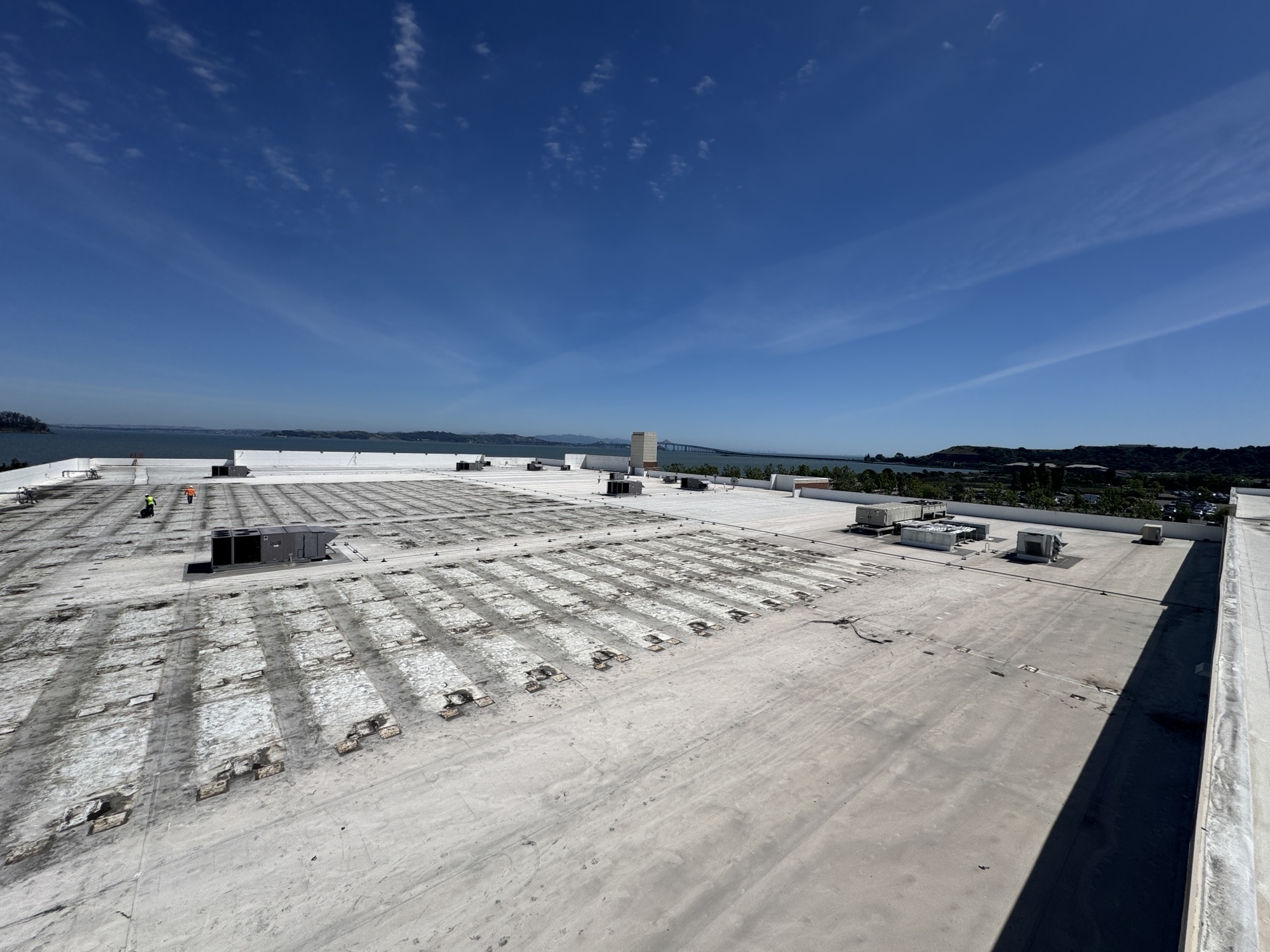
A major national retailer had installed an impressive rooftop solar system years earlier. The system worked. The investment made sense. The intentions were right.
The roof underneath the system needed replacement sooner than expected.
At first, the situation felt frustrating and, frankly, a little embarrassing for everyone involved. Nobody wants to explain why a perfectly functional solar installation now has to come down because of roofing economics.
But this is exactly the kind of nuance the public rarely hears about.
As the retailer evaluated the costs of removing and reinstalling the older system, the math became clear: if the panels were already coming down, it made more sense to upgrade to newer, more efficient technology.
A plethora of usable solar panels might have ended up in landfills. Perfectly functioning equipment could have been discarded simply because the industry lacked infrastructure for second-life deployment.
Instead, something better happened.
Because we worked together on the project, the existing equipment was responsibly removed, evaluated, and redirected into secondary-use markets where the panels could continue generating clean energy.
The result?
In a strange way, humanity ended up with twice the solar.
Not too bad, eh?
One of the biggest misconceptions about solar decommissioning is that it only exists for systems that are “dead.”
That’s rarely true.
Many systems being decommissioned today still have meaningful operational life remaining. In fact, some panels can continue producing energy for decades, even if they no longer make economic sense for their original installation.
That distinction matters.
Because when solar equipment is reused, repurposed, refurbished, or redeployed, we extend the environmental value of the original manufacturing investment while reducing unnecessary waste streams.
That’s the heart of the circular economy we make possible at Decom Solar. And, it’s why Decom Solar approaches every project with this mentality:
Sometimes the answer is repowering. Sometimes it’s resale. Sometimes it’s a donation to underserved communities. Sometimes it’s responsible recycling.
But, with us it’s never a landfill.
The industry is changing.
Asset owners are beginning to realize that solar decommissioning is not simply an end-of-life service. It’s operational planning. It’s an ESG strategy. It’s risk management. It’s sustainability stewardship.
Because whether a system is aging, underperforming, temporarily removed for construction, or simply being upgraded, there are now better pathways available than “tear it down and throw it away.”
We help clients navigate the gray areas nobody talked about twenty years ago when the first wave of solar installations went up. And, as more systems approach transition points, one thing is becoming clear:
It will be defined by how responsibly we handle what comes next.

2026
| Decom Solar