

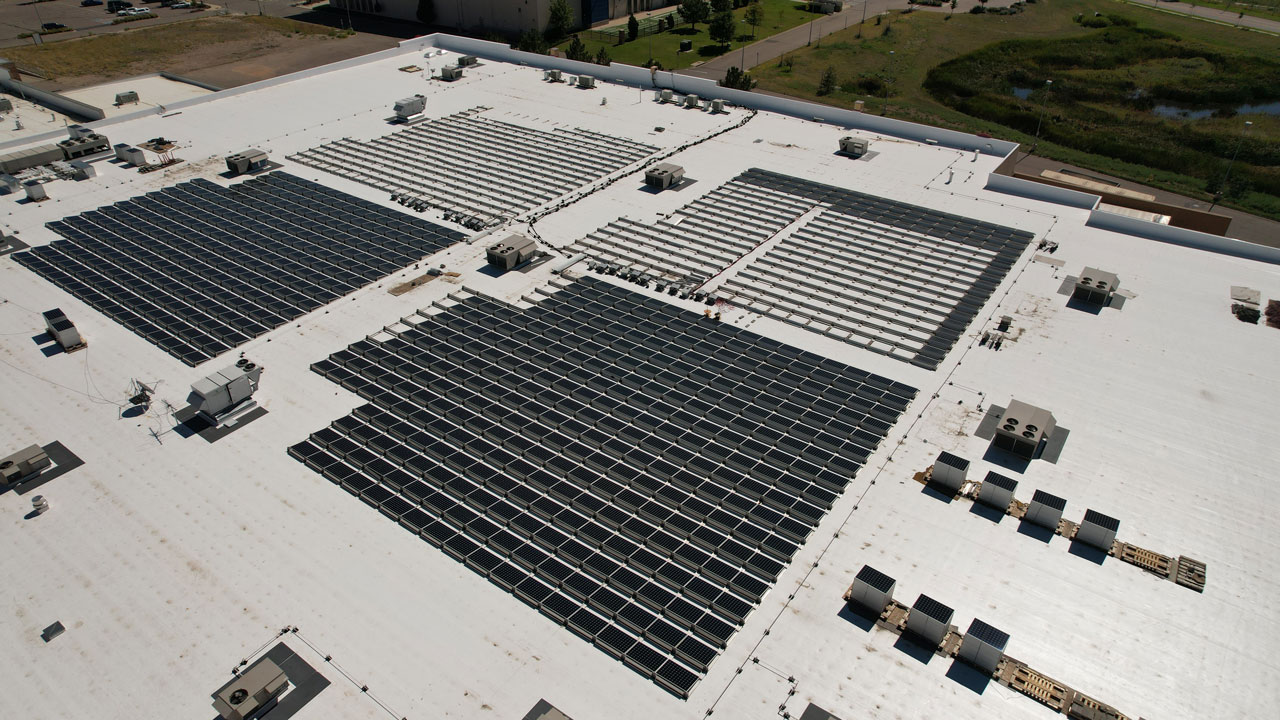
It’s time to have the scale conversation. After helping one of our clients, a notable American retailer, with more than six hundred solar sites, we’re confident that large portfolios need to hear this.
Everything we do at Decom Solar becomes exponentially important.
For solar asset owners, scale is usually seen as a strength. More sites mean more leverage with vendors. More sites mean more predictable cash flow. More sites mean you’re a “serious player” in the energy transition, especially with solar.
But, there’s a quiet reality emerging across the industry:
And most asset owners aren’t prepared for it.
Decommissioning a single solar site is complex enough. Decommissioning dozens, or hundreds, introduces an entirely different level of operational, financial, and reputational risk.
At scale, small inefficiencies compound into major problems:
For large portfolios, decommissioning is no longer a “future problem.” It’s a strategic risk that should already be on the balance sheet.
Many asset owners assume decommissioning will look like construction in reverse.
It won’t.
Unlike installation, end-of-life solar faces fragmented infrastructure, inconsistent regulations, and limited ethical disposal options, especially at scale. When hundreds of sites begin aging out within the same window, owners without a clear strategy face only bad choices:
Each of these paths carries risk: financial, environmental, and reputational.
Let’s be direct: most solar decommissioning today ends with panels in landfills.
Not because owners want that outcome, but because they don’t have an alternative.
As volumes increase, the industry’s lack of ethical, scalable solutions becomes more visible. And for large asset owners, visibility cuts both ways. Regulators, investors, and the public are paying attention.
If your portfolio spans 50+ sites, the question is no longer if decommissioning will become a scrutiny point; it’s when.
Ironically, the same scale that creates leverage also creates vulnerability:
Without proactive planning, asset owners are forced into decisions that contradict the very sustainability values solar was built on.
Decom Solar exists for one reason: to ensure solar decommissioning does not become the industry’s environmental failure story.
We are the only dedicated resource focused on ethical solar decommissioning at scale. We’re providing pathways that prioritize reuse, responsible recycling, and full transparency over where materials actually end up.
No landfills.
No offloading responsibility.
No pretending the problem doesn’t exist.
For large asset owners, this isn’t just about doing the right thing; it’s about protecting enterprise value, regulatory standing, and long-term credibility.
Asset owners who address decommissioning now gain real advantages:
Most importantly, they avoid being forced into unethical outcomes simply because options ran out.
If 20% of your portfolio needed to be decommissioned tomorrow:
If the answer isn’t crystal clear, the risk is already present.
Decommissioning isn’t the end of the solar story; it’s the moment when the industry proves whether it meant what it said about sustainability.
Decom Solar is here to make sure the story ends the right way.
2026
| Decom Solar